
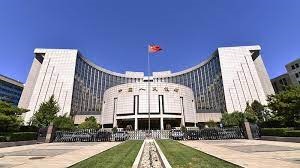
China left its benchmark lending rates unchanged as expected at the monthly fixing on Friday.

Asian shares were pinned near three-month lows on Friday as investors awaited key U.S. inflation data that could either ease or worsen concerns about price pressures, while the dollar towered at two-year peaks.

The European Parliament gave its final approval on Tuesday to a one-year delay of Europe's landmark deforestation law, which from Dec. 2025 will ban the import of beef, soy and other goods linked to the destruction of forests. The lawmakers' approval paves the way for European Union countries to also approve the delay, which they are expected to do this week - as a formality, with no changes. After that, the postponement will pass into law.

British inflation hit an eight-month high in November, but the rise in services prices - watched closely by the Bank of England as an underlying measure of inflationary pressures - held steady, offering the central bank a little bit of relief.

Joblessness among the youth in Chinese cities eased for a third straight month in November after reaching its highest this year in August, official data showed on Wednesday.
The urban jobless rate for 16-to-24-year-olds, excluding students, fell to 16.1% from 17.1% in October, according to data from the National Bureau of Statistics.
The unemployment rate for 25-29-year-olds also dropped, falling slightly to 6.7% from 6.8%, while the jobless rate for 30-59-year-olds was unchanged at 3.8%.
The nationwide jobless rate was at 5% in November, according to data released by the statistics bureau on Monday.
China stopped reporting the data for youth joblessness for months after the unemployment rate for 16-24-year-olds hit a record 21.3% in June last year.
The National Bureau of Statistics resumed publishing the closely watched benchmark in December 2023 after changing the methodology to exclude students.
The jobless rate also does not account for job seekers who have given up on job searches, and does not assess the unemployment situation in rural China.
China's economic recovery has stuttered this year amid weak domestic demand and a prolonged property crisis, although some officials are expecting the economy to achieve its 2024 growth target of around 5%.
The government has announced a wave of stimulus measures to buttress the economy ahead of more external headwinds expected from a second Trump administration in the United States next year.
Chinese government advisers have also recommended that Beijing should maintain an economic growth target of around 5.0% for next year, pushing for stronger fiscal stimulus to mitigate the impact of expected Trump tariff hikes on the country's exports.
Source : Investing.com

The U.S. current account deficit widened to a record high in the third quarter on strong growth in imports and lower income receipts, with some economists warning of a potential threat to a country already saddled with a large government budget deficit.
The Commerce Department's Bureau of Economic Analysis said on Wednesday the current account deficit, which measures the flow of goods, services and investments into and out of the country, increased $35.9 billion, or 13.1%, to an all-time high of $310.9 billion last quarter.