
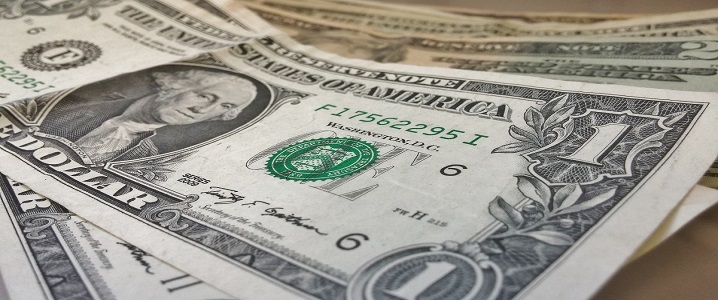
TOKYO (Reuters) - The U.S. dollar fell to a three-year low against its Australian counterpart and teetered near three-year low against the British pound as progress in curbing coronavirus infections boosted sentiment for riskier assets.

TOKYO, Feb 19 (Reuters) - Japan’s factory activity expanded for the first time in 22 months in February, a private-sector survey showed on Friday, as strong export demand helped manufacturers shake off the drag from the coronavirus pandemic.

SYDNEY (Reuters) - Asian stocks pulled back from all-time peaks on Friday as higher longer-dated bond yields and underwhelming U.S. data dented investor confidence in a faster economic recovery from the COVID-19 pandemic, while gold hit a seven-month trough.
MSCI’s broadest index of Asia Pacific shares outside of Japan was last down 0.1% at 733.67 from a record high of 745.89 touched on Thursday.
The index is on track for a small weekly loss after two consecutive weeks of gains.
Since the start of the year, the index has surged nearly 10.5% largely led by easy monetary and fiscal policies around the world.
On Friday, Australia’s benchmark S&P/ASX 200 index was down 0.8% while Japan’s Nikkei fell 0.4%.
Chinese shares started in the red with the blue-chip CSI300 off 0.6%.
“The recent move up in longer dated core yields appears to be weighing on equity investors’ mind,” said Rodrigo Catril, forex strategist at National Australia Bank.
Core bond yields have pushed higher globally led by the so-called “reflation trade” where investors wager on a pick-up in growth and inflation. Successful coronavirus vaccine roll-outs so far and hopes of massive fiscal spending under U.S. President Joe Biden have spurred reflation trades.
Germany’s 10-year yield on Thursday posted its highest close since June, British 10-year yields traded at a 10-month top of 0.65% and U.S. Treasury yields are hovering near one-year highs around 1.3%, a large factor supporting the U.S. dollar.
Rising bond yields hurt the appeal of gold, with spot prices hitting a seven-month low of $1,766 an ounce on Friday.
While rising yields weighed on investor sentiment, “disappointing U.S. jobless figures didn’t help the cause either,” Catril added.
An unexpected increase in the number of Americans seeking jobless benefits hung heavy on outlook. The Labor Department reported initial unemployment claims rose by 13,000 to 861,000, injecting skepticism about how quickly the U.S. economy could rebound from the global pandemic.
Further, U.S. housing starts fell 6.0% in January, the first decline in five months.
On Wall Street, the Dow fell 0.38%, the S&P 500 lost 0.44%, and the Nasdaq Composite 0.72%.
In currencies, the dollar was steady with its index at 90.568.
The British pound hit its highest in over three years at $1.3965 led by the country’s successful vaccine roll-out where 16.5 million people have already been innoculated. It is on track for a sixth straight weekly rise. [FRX]
The euro is poised for a small weekly loss. The single currency was last at $1.2085.
The risk sensitive Australian dollar was on track for a third straight weekly rise, last trading at $0.7762.
In commodities, oil markets saw some profit-taking following days of gains that were driven by a deep freeze across Texas that weighed on production. [O/R]
Brent crude fell $1.17 to settle at $62.76 a barrel. U.S. West Texas Intermediate (WTI) crude futures slipped $1.37 to $59.15 a barrel.
Copper surged nearly 3% to its highest since April 2012 on Thursday led by demand from Chinese investors who returned from a week-long holiday.
Source Reuters
TOKYO (Reuters) - The U.S. dollar maintained its biggest loss in 10 days on Friday after disappointing U.S. labour market data bruised optimism for the country’s speedy recovery from the COVID-19 pandemic.

MELBOURNE (Reuters) - Oil prices slid as much as 2% in early trade on Friday, adding to overnight declines, on worries that refineries shut by a big freeze in the U.S. South will take some time to revive operations and dent crude demand.
TOKYO/WASHINGTON, (Reuters) - Asian stocks fell on Thursday as investors locked in profits on sectors that have outperformed recently in a sign of growing caution about the recent rally in global equities.
MSCI’s broadest index of Asia-Pacific shares outside Japan fell 0.42% but was still close to an all-time high. Chinese markets dipped on their first day of trade after the Lunar New Year break.
In signs global sentiment was still buoyant, Euro Stoxx 50 futures were up 0.22%, German DAX futures were up 0.15% at 13,917, and FTSE futures rose 0.3%.
Strong U.S. retail sales, new signs the Federal Reserve will maintain its accommodative stance, and an ongoing push for further U.S. stimulus have bolstered economic optimism, but some analysts remain cautious because new strains of the coronavirus continue to emerge.
“With an even larger stimulus package likely to be passed by Congress before the end of March, the U.S. economic recovery could gain more momentum in 2021,” wrote Commonwealth Bank of Australia currency analyst Carol Kong.
“Despite the recent positive vaccine developments, the global economic outlook remains uncertain partly because of the spreading virus variants.”
Australian stocks rose 0.01%, while Japan’s Nikkei fell 0.14%.
E-mini futures for the S&P 500 fell 0.13%.
Yields on two-year Treasuries hit a record low and the 10-year yield extended a pullback from a one-year high as a bond market sell-off started to fade.
On Wall Street, technology stocks fell, driving down the Nasdaq while other companies rose on broader economic optimism.
The Dow Jones Industrial Average rose 0.29%, while the S&P 500 lost 0.03% and the Nasdaq Composite dropped 0.58%.
Technology shares in Asia took their lead from the Nasdaq and fell. Investors also sold shares in the energy, materials, and consumer goods sectors that have recently risen sharply because they are expected to benefit from an economic rebound.
Shares in China, which traded for the first time since the week-long Lunar New Year holiday, started brightly but later fell after the Peoples’ Bank of China drained 260 billion yuan ($40.31 billion) from money markets, raising concerns about tightening liquidity.
The MSCI’s global stock index fell 0.1% but was still near a record high.
In contrast to concerns about tightening in China, minutes from the January Fed meeting showed policymakers willing to push further accommodation to boost the pandemic-scarred U.S. economy.
Hopes for a stronger U.S. economy supported the greenback. The dollar index, a measure of the currency’s strength against six other major currencies, was steady, holding onto a 0.25% gain from the previous session.
The risk-on appetite was apparent in bitcoin, which continued its upward march to exceed $52,000 amid signs it may be gaining more mainstream acceptance. Cryptocurrency ethereum also rose more than 2% to new record high of $1,900.
The two-year U.S. Treasury yield briefly touched a record low of 0.1049%. Benchmark 10-year yields eased slightly to 1.2771%, pulling away from the highest level since Feb. 27, 2020 as some investors judged that recent selling of fixed income had gone too far.
An ongoing deep freeze in Texas continued to drive up oil prices, as the unusually cold weather hampered output at the largest U.S. crude producing state. Brent crude gained 1.38% to $65.23 a barrel, while U.S. West Texas Intermediate (WTI) crude rose 1.08% to $61.80 a barrel, both reaching levels not seen since January last year.
Spot gold edged up 0.41% to $1,783.61 per ounce. U.S. gold futures rose 0.28% to $1,776.10 per ounce.
Source Reuters